
SS (SHOULDER STUDS)
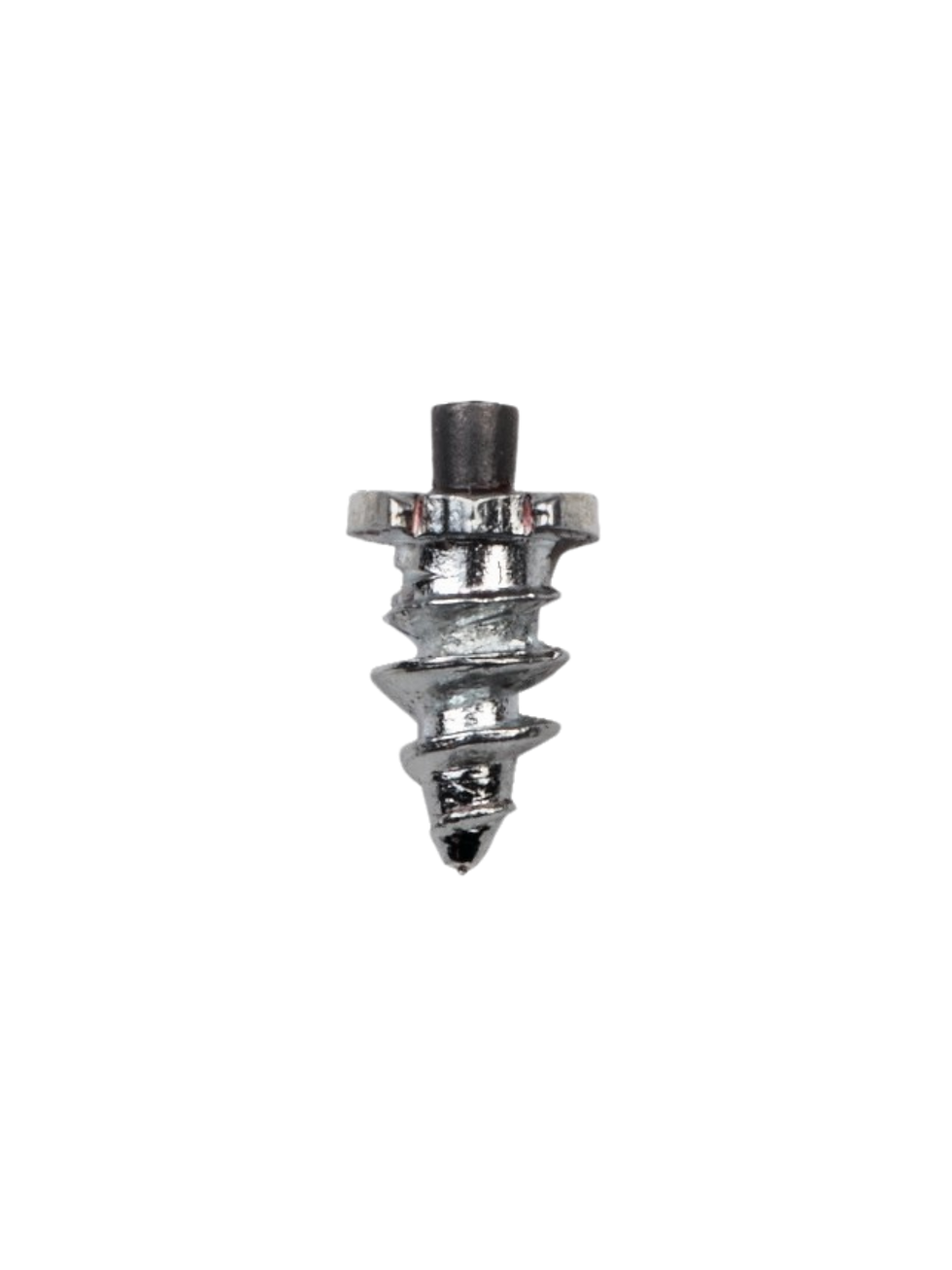
The SS model is a shoulder-mounted stud designed and patented by iGrip Industries Inc. The shoulder design ensures a secure grip. It is suitable for all types of equipment, from light vehicles to heavy vehicles.
ADVANTAGES
Patented shoulder stud made of hardened galvanized steel, equipped with a tungsten carbide insert. Its shoulder design makes it easy to install and remove, preventing insertion and thus minimizing damage to the rubber. It offers increased stability and traction, enhanced safety, and exceptional durability. Furthermore, it reduces fuel consumption. This stud is designed for all types of applications, from footwear to mining trucks.



HOW TO INSTALL THE SS STUD MODEL ?
STEP 1, SS STUD INSTALLATION
The SS stud is designed to be installed in the tire tread. Its shoulder helps limit how far the stud penetrates the rubber and helps keep it properly in place.
BEFORE INSTALLATION :
-
Measure the tire tread depth to select a stud of the appropriate length. For example, a tread depth of 1 1/4 inches must be taken into consideration when selecting the stud.
-
Make sure the SS stud model and its length are suitable for the tire and its intended application.
The SS stud is made of galvanized hardened steel and features a tungsten carbide tip. Its design promotes durability, traction, and ease of installation and removal.
Important: The appropriate stud length and installation method must be confirmed according to the manufacturer's specifications. Do not select the stud length based solely on tread depth without verifying stud compatibility.
STEP 2, OPERATION AND QUANTITY OF STUDS
The SS stud is a shoulder-style stud designed to improve tire traction. Its hexagonal profile promotes grip, while its shoulder helps keep it securely in place in the rubber.
It is suitable for various types of equipment, ranging from light-duty to heavy-duty vehicles, depending on tire compatibility and the intended application
HOW TO DETERMINE THE REQUIRED QUANTITY:
-
Count the number of tread blocks on one side of the tire.
-
Multiply this number by two, three, or four to determine the total number of tread blocks on both sides, as applicable.
-
Generally, allow for 2 to 4 studs per tread block, depending on the requirements and tire configuration.
-
Stagger the installation pattern and distribute the studs evenly to promote traction and stability.
Example:
-
17 tread blocks on each side of the tire.
-
17 × 2 = 34 tread blocks in total.
-
34 × 4 = 136 studs if using 4 studs per tread block.
In this example, approximately 100 to 150 studs per tire may be required, depending on the selected installation pattern.
GUIDELINES FOR RESPONDING TO CUSTOMERS
When responding to a customer regarding the SS stud:
-
Clearly explain how to measure the tire tread and select a compatible stud.
-
Explain that the shoulder helps prevent the stud from penetrating too deeply into the rubber and helps keep it in place. The stud must be recessed into the rubber, not protruding beyond the rubber surface.
-
Help the customer calculate the required quantity based on the number of tread blocks and the number of studs planned per block.
-
Clarify that 2 to 4 studs per tread block is a general calculation guideline, not a universal rule for all tires.
-
If the customer asks for an exact stud length, installation tool, installation depth, or technical procedure that is not documented here, request the necessary information or recommend checking the manufacturer's instructions.
-
Never guarantee a specific traction or safety result without verified technical data.
-
If the customer provides the tire type, its application, and the number of tread blocks, help estimate the required quantity and clearly state the assumptions used.